
October 27, 2026
How to Write a Rental Listing That Answers Questions Before the Viewing
Write a useful rental listing with clear costs, actual-unit photos, furnishing details and availability. Includes a reusable outline for owners.
A useful rental listing helps a tenant decide whether the home fits before either of you spends time arranging a visit. Describe the property as it is today, make the costs understandable and explain how a serious enquiry can move forward.
You do not need a longer list of superlatives. You need the information a tenant will otherwise have to ask for one message at a time.
Start with the home and its availability
State the property type, number of bedrooms and bathrooms, locality, floor, lift access and furnishing status. Describe what the furnishing label actually includes. “Semi-furnished” is more useful when followed by the specific wardrobes, fixtures and appliances that will remain.
Give a realistic available-from date. If a current tenancy or repair must finish first, describe the confirmed position rather than promising immediate possession. Update the listing when the date or status changes.
For location, publish enough information for a meaningful shortlist while controlling sensitive access details. Share the exact unit, entry instructions and visit arrangements privately with appropriate viewers. Do not publish door codes, keys, current occupants' routines or identity documents.
Make every cost easy to find
Separate the monthly rent, maintenance, deposit, parking and other charges. Explain what is included, what is billed by usage and what is still to be confirmed. State whether the quoted deposit is refundable under the agreed terms; do not use “all-inclusive” if important exclusions remain.
If you are advertising as a representative, disclose your role and any applicable service charge clearly. Confirm who is authorized to discuss terms, sign documents and receive payments. Avoid claiming a service is free unless that reflects the actual offer.
The aim is to help a tenant understand the proposition, not to turn the listing into a full agreement. Preserve the agreed final terms in the tenancy documents and receipts.
Photograph the unit a tenant will actually see
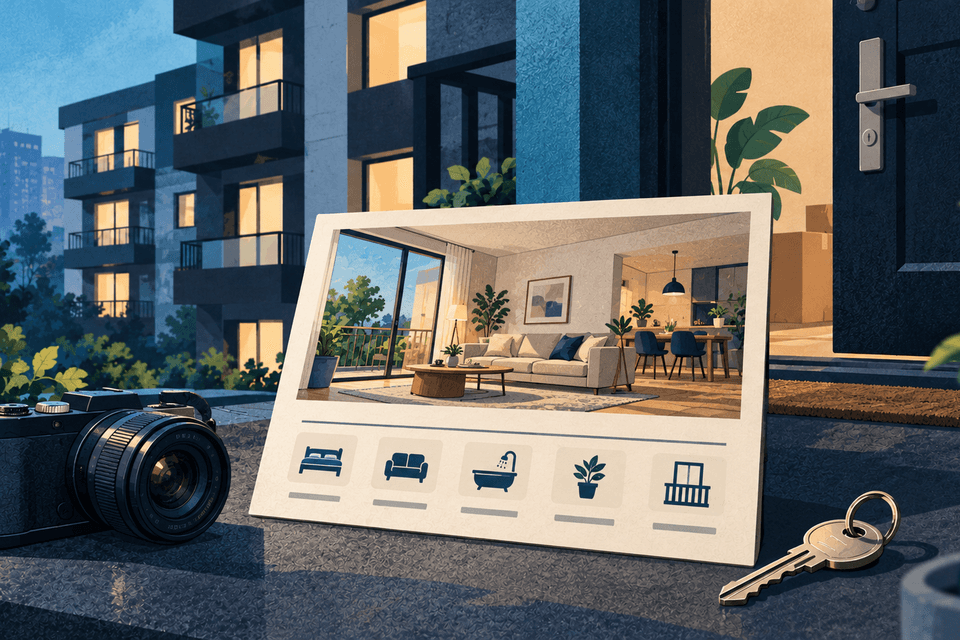
Use recent images of the actual home. Show the main rooms, kitchen, bathrooms and relevant storage or utility spaces. Include a logical sequence so a viewer can understand the layout. Label older photographs or representative images accurately if you must use them.
Avoid camera choices or edits that materially misrepresent room size, light or condition. Disclose a known repair that affects availability or use. A viewing that contradicts the photographs creates questions the listing could have settled earlier.
Before publishing, check every image for faces, occupant photographs, personal documents, valuables, reflections, vehicle plates and access information. Obtain appropriate permission for images involving current occupants and remove unnecessary personal details.
Describe facilities as specific facts
“Power backup” could mean common areas, selected circuits or the whole unit. “Parking available” could refer to an assigned bay or a shared arrangement. “Near the metro” does not establish a useful walk from this building.
Replace those labels with what you can confirm. State the available internet arrangements, water supply questions a viewer should discuss, building access, permitted facility use and any charges. If giving a travel estimate, identify its route, mode and conditions instead of presenting a best-case number as a guarantee.
Describe relevant occupancy and house rules clearly and fairly. Keep them focused on the property and the applicable agreement, without inviting applicants to disclose unrelated sensitive personal information.
Copy this listing outline
Home: [property type, bedrooms, bathrooms, locality, floor and lift].
Available from: [confirmed date and any disclosed dependency].
Monthly costs: [rent] + [maintenance] + [other recurring charges]; [usage-based costs and exclusions].
Move-in amounts: [deposit and refund terms to be agreed] + [other disclosed charges and recipients].
Included items: [furniture, appliances and fixtures that will remain].
Facilities: [specific parking, backup, access and other verified details].
Condition: [recent photographs, known repairs and expected completion].
Viewing: [available windows, contact route and what will be confirmed privately].
Advertiser: [owner or authorized representative, with role explained].
Read the finished version as a tenant: can you identify the home, estimate the cost and understand the next step without guessing?
Keep the listing current through the enquiry process
Confirm the home is still available before arranging a visit. Give viewers consistent information and record material changes to the offer. If you have accepted a reservation, make the status clear through the platform's available controls rather than continuing to present the unit as unconditionally available.
After choosing a tenant, organize the agreed terms, payment records and condition baseline. RentAid provides property-listing and rental-document workflows; confirm the applicable service terms and sign-in requirements before using them.
Common questions
Should I hide the deposit until someone visits? Publishing clear cost information lets people assess affordability earlier. Explain any amount that depends on the final arrangement.
Can I reuse photos from another identical unit? They may misrepresent the actual home. Prefer current images of this unit; clearly label any representative material and disclose differences.
Will a detailed listing guarantee a quick rental? No. Price, demand, property suitability and other factors matter. Clear information helps people evaluate the offer on its real terms.